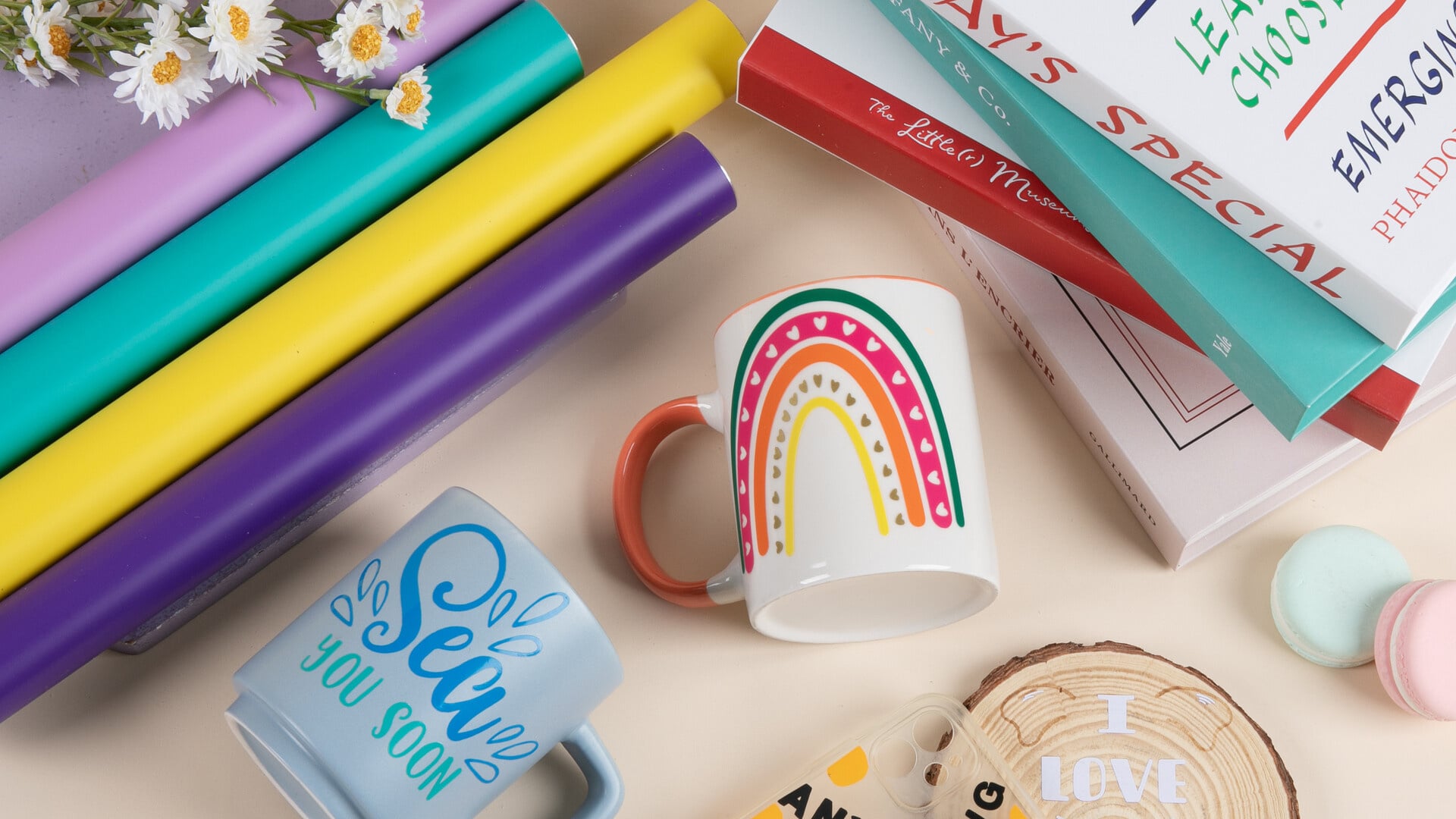
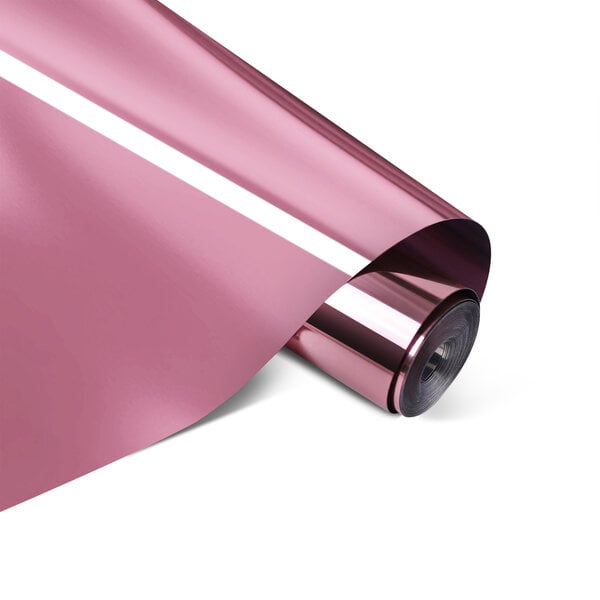
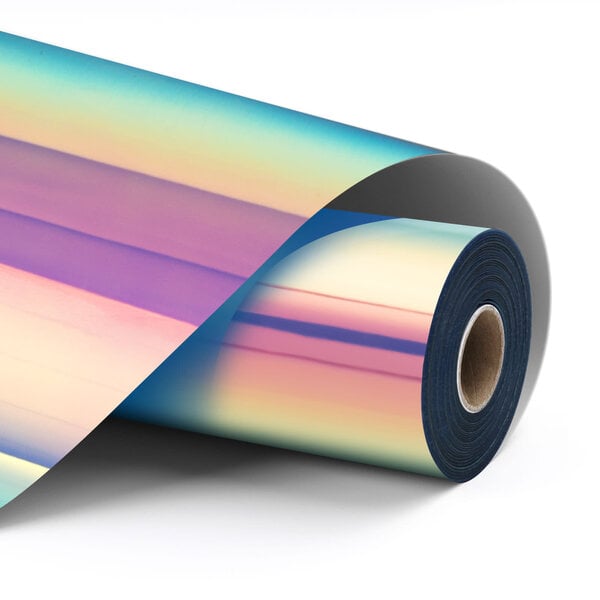
Adhesive vinyl is one of the most popular materials in crafting. It has a colour or pattern on one side, and sticky glue on the other - just like a sticker. Adhesive vinyl is a flexible and versatile material that can be used to make eye-catching signs and logos for corporate or personal use. It can be applied to smooth hard surfaces, like glass, ceramics, metal, plastic, or (painted) wood. Because adhesive vinyl is durable and waterproof, you can use it indoors and outdoors.
Adhesive vinyl is not suitable for rough or porous objects because it will not stick to them. For example, if you want to work on wood then you might need to sand and/or paint it before applying your vinyl.
What is the difference between adhesive vinyl and heat transfer vinyl?
If you have been looking into crafting with vinyl, you may have seen terms like adhesive vinyl and heat transfer vinyl. They are two different materials with different applications.
Adhesive vinyl has a sticky side and does not require any heat for it to stick to objects. This makes adhesive vinyl suited for smooth surfaces like glass, plastic, metal, notebook covers, painted wood and even paper.
Heat transfer vinyl (also known as HTV or iron-on vinyl) has a heat-activated adhesive on the backside. It needs heat and pressure to stick to anything.
This makes HTV best suited for clothes, bags, and other fabrics. You can use heat transfer vinyl to personalise a t-shirt for example, but you can also use it on untreated wood and other hard surfaces that are not suitable for adhesive vinyl.
So how can you tell adhesive vinyl and heat transfer vinyl apart?
Adhesive vinyl usually has a colour or pattern on one side and a paper carrier sheet on the other, which is often white. Sometimes there is a grid on the paper side to act as a guide for cutting.
You should be able to place your nails between the two layers and peel the vinyl from the carrier sheet like sticky paper. If you cannot, then it is not adhesive vinyl.
On the other hand, heat transfer vinyl has a transparent plastic carrier sheet on one side, and a coloured matt back on the other side.
You should not be able to easily peel off the heat transfer vinyl.
Do you need to mirror adhesive vinyl for cutting?
No, if you are using adhesive vinyl, do not mirror your design. You will place the material face up (paper side down) on the cutting mat before cutting. Afterwards, you can use transfer tape to lift the image and then apply it to your object.
Tips for using adhesive vinyl
When cutting vinyl, always place the paper backside down on the cutting mat.
Do not use adhesive vinyl with a heat press! Applying heat will damage the vinyl. Adhesive vinyl acts as a sticker, and will stick to hard surfaces without needing heat or high pressure.
Vinyl adhesive is not food safe, so please do not place it in areas where it will come into direct contact with food. If you want to use adhesive vinyl on cups and glasses, please leave a space between your design and the top of the object.
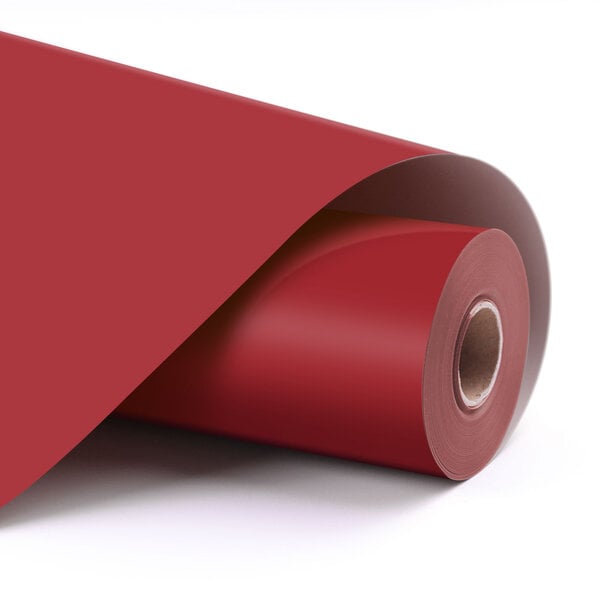
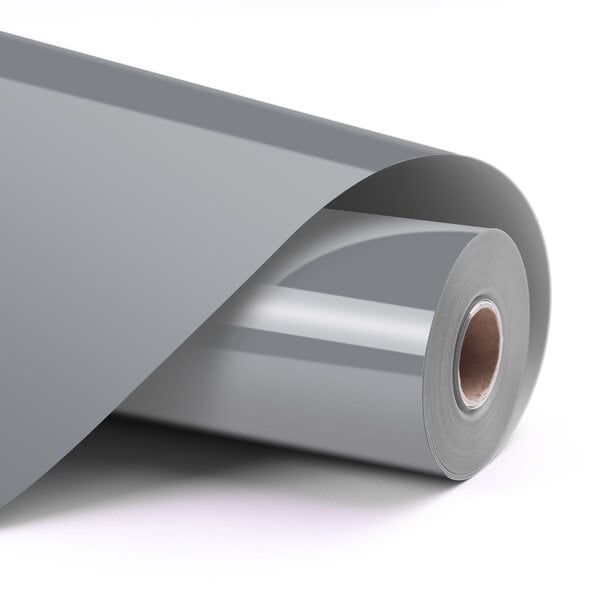
A colour for every project
Browse our range of adhesive vinyls!