Vacuum forming is a highly adaptable plastic manufacturing technique used across a wide array of industries. This comprehensive guide explores how vacuum forming works, the materials involved, key advantages, and real-world applications. Whether you're prototyping, producing packaging, or developing automotive components, vacuum forming may be the perfect solution.
What is vacuum forming?
Vacuum forming, sometimes referred to as vacuum moulding, is a thermoforming process where a heated plastic sheet is stretched over a mould and shaped using vacuum pressure. It is particularly suited to low- to medium-volume production, offering a cost-effective alternative to injection moulding by significantly reducing tooling costs.
This method is widely employed in industries such as automotive, medical, packaging, consumer goods, retail displays, and cosplay or other prop making, thanks to its efficiency, versatility, and ability to create detailed shapes.
Vacuum forming vs thermoforming vs pressure forming
Thermoforming is a broad term covering techniques like vacuum forming and pressure forming. Here's a quick comparison:
| Feature |
Vacuum forming |
Pressure forming |
| Method |
Vacuum pulls plastic over a mould |
Vacuum and positive air pressure on both sides |
| Machine size |
Generally compact |
Larger, industrial scale |
| Detail level |
Moderate |
High, ideal for intricate textures |
| Ideal use cases |
Simple shapes, prototypes |
Parts needing sharp details and design accuracy |
In vacuum forming, male (convex) or female (concave) moulds are used. Male moulds define internal dimensions, while female moulds shape the external surface. Both mould types work with a vacuum to produce a final form.
The vacuum forming process, step-by-step
Here's how vacuum forming works:
Step 1: mould design
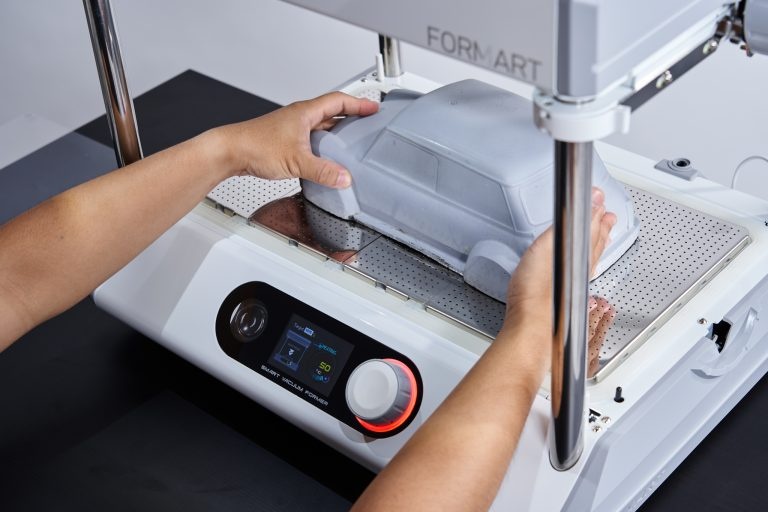
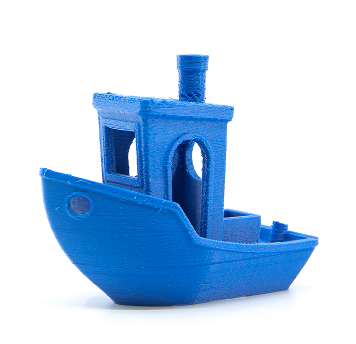
Create a mould using materials such as MDF, aluminium, 3D-printed plastics, clay, plaster, or resin, depending on durability and detail requirements.
Step 2: clamping
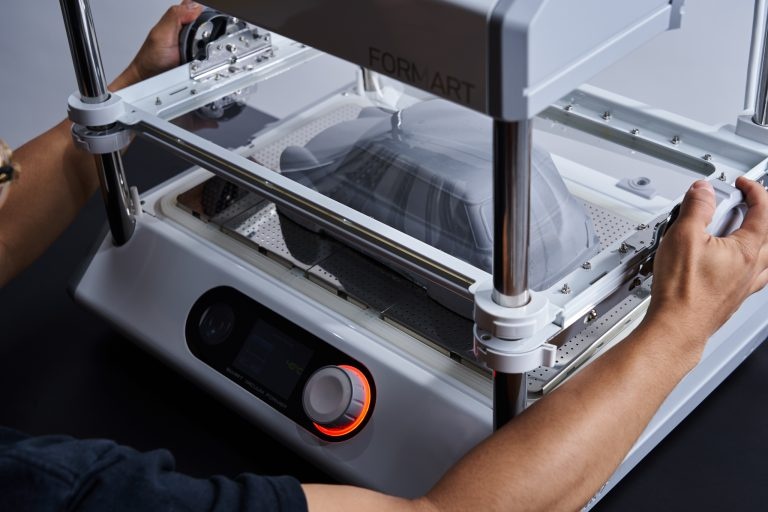
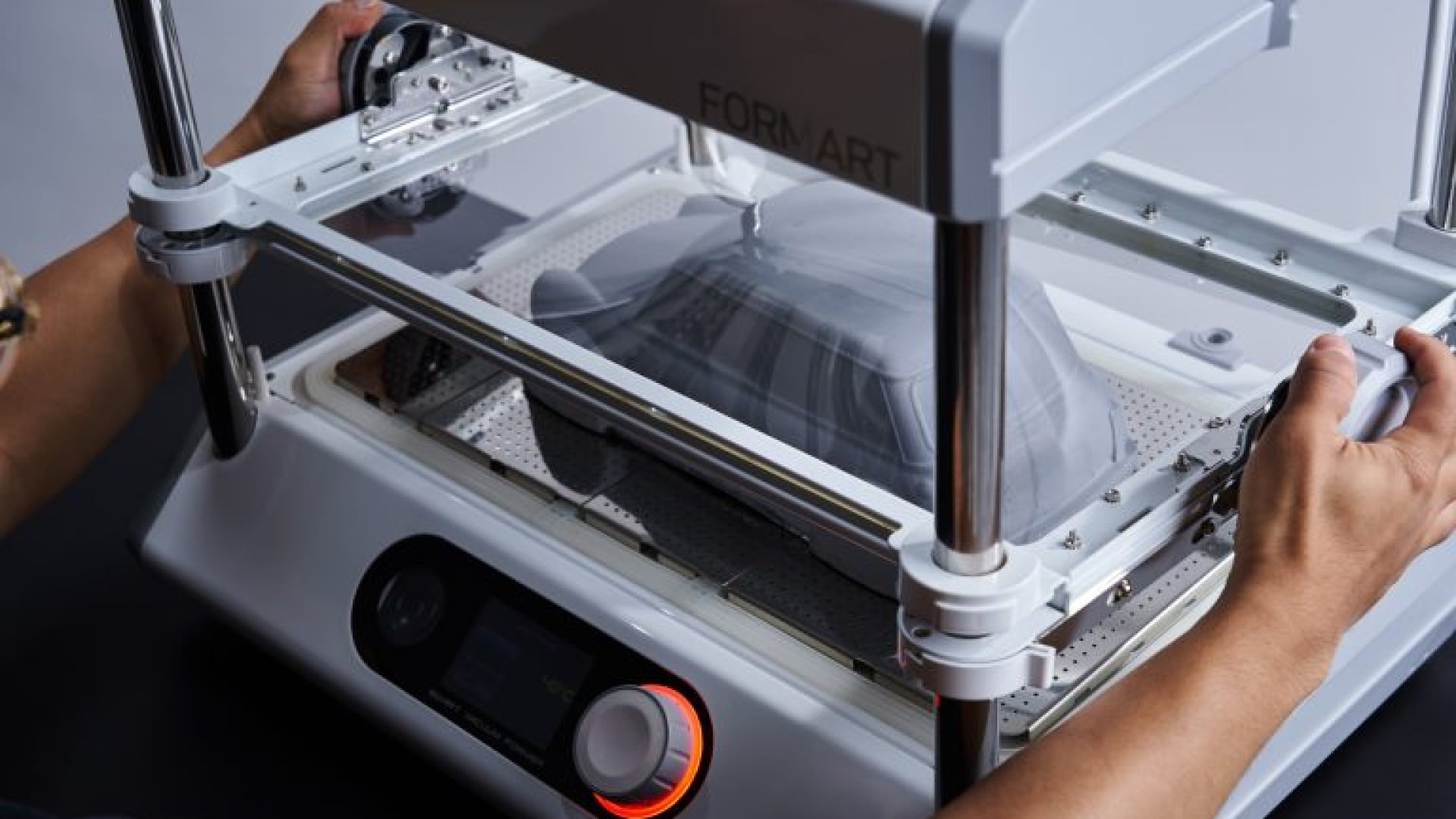
Secure the plastic sheet in place using clamps within the vacuum former.
Step 3: heating
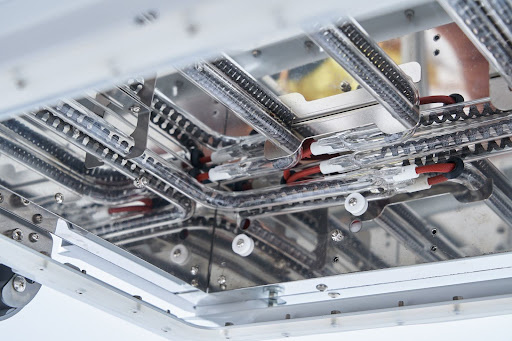
Heat the plastic using ceramic or infrared heaters until it becomes soft and pliable.
Step 4: forming
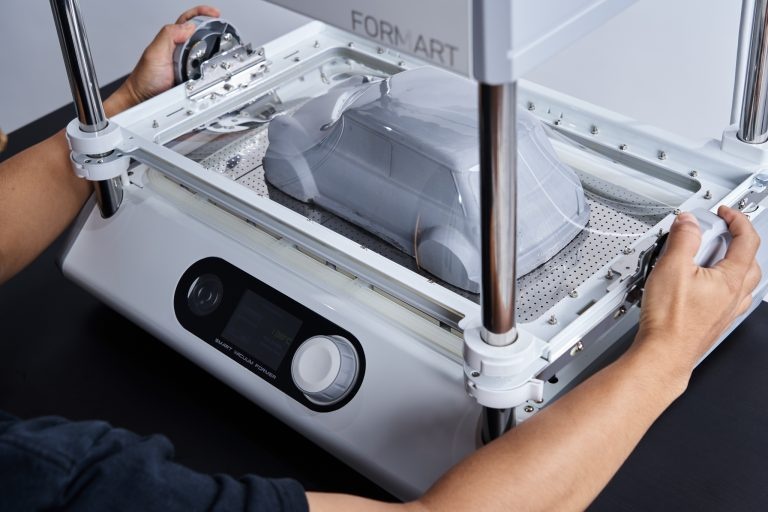
Apply a vacuum to draw the heated plastic tightly over the mould, shaping it into the desired form.
Tip: For female moulds, drill small vent holes to allow air to escape and ensure proper forming.
Step 5: cooling
Use fans or air blasts to solidify the plastic while retaining shape and definition.
Step 6: releasing
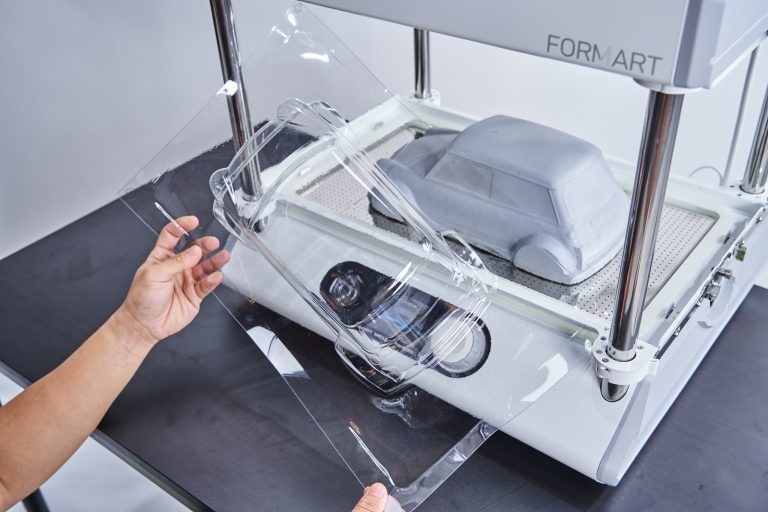
Remove the formed plastic from the mould after cooling.
Step 7: trimming
Trim excess material and smooth edges using scissors, blades, or sanding tools.
Step 8: finishing

Additional finishes such as painting, drilling, or surface treatments can enhance appearance and functionality.
Most common vacuum forming materials
Selecting the right plastic material is crucial. Here are the most popular options:
ABS (Acrylonitrile Butadiene Styrene)
High impact resistance and strength, which makes it ideal for automotive parts, electronic housings, and sanitary fittings.
PC (Polycarbonate)
Tough, transparent, and heat-resistant, which makes it perfect for medical devices, safety gear, and display panels.
PP (Polypropylene)
Lightweight and flexible, so it is used in packaging, chemical tanks, and vehicle interiors.
PVDF (Polyvinylidene Fluoride)
Chemical- and heat-resistant; excellent for high-purity industrial or medical applications.
PET (Polyethylene Terephthalate)
Clarity and recyclability make it ideal for food packaging and consumer goods.
PVC (Polyvinyl Chloride)
This material is widely used in construction and automotive, because it is versatile and flame-retardant.
HIPS (High Impact Polystyrene)
Economical and easy to form, which makes it suitable for packaging, point-of-sale displays, and models.
PMMA (Acrylic/Perspex)
Clear and weather-resistant; used in skylights, signage, and sanitaryware.
LDPE (Low-Density Polyethylene)
LDPE is best for shallow and detailed moulds, because it is lightweight and cold-resistant.
TPU (Thermoplastic Polyurethane)
Flexible and eco-friendly; used for skin-safe items, moulds, and covers.
Types of vacuum forming machines
Choosing the right machine depends on production scale:
- Industrial machines designed for large-scale production. They offer high precision and real-time parameter adjustment.
- Mid-size/semi-automatic machines are ideal for medium runs, thanks to their balance between efficiency and ease of use.
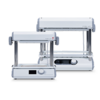
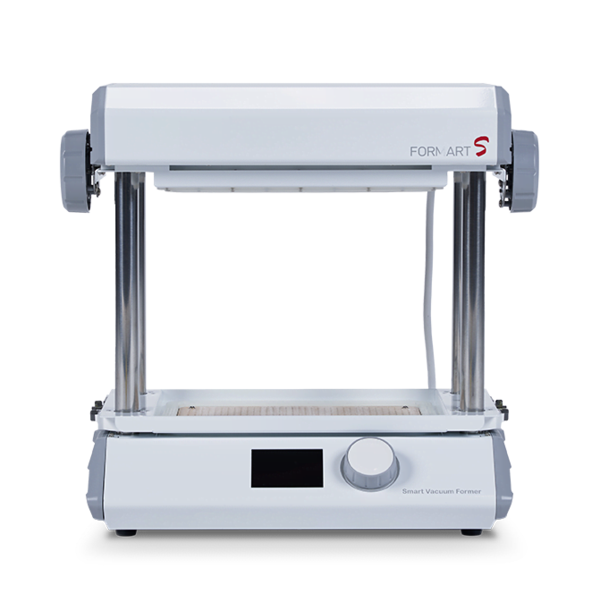
- Desktop vacuum formers are compact and efficient, which makes them perfect for hobbyists, educators, R&D departments, and small businesses.
- DIY machines can be custom-built for educational or low-cost projects if you are handy and want to experiment with vacuum forming.
Benefits of vacuum forming
Vacuum forming offers several advantages:
- Cost-effective: Lower tooling and prototyping costs make it ideal for R&D, prototyping, and short production runs.
- Fast turnaround: Simplified tooling and 3D-printed moulds reduce lead times.
- Flexible design: Easily create unique, detailed parts in varied shapes and sizes.
- Consistency: Reliable repeatability using the same mould ensures uniform quality.
- Material variety: Compatible with food-grade, flame-retardant, and medical-grade plastics.
- Eco-friendly: Scrap plastic can often be recycled, reducing waste.
Challenges and limitations
Despite its benefits, vacuum forming has certain limitations.
- Complex or deep draw shapes may result in inconsistent thickness or loss of detail.
- Risk of warping caused by uneven heating or inadequate vacuum pressure.
- Not ideal for high volume production, since moulds may degrade over long runs, increasing costs.
But there are solutions for these issues!
- Use a positive mould for better structural integrity.
- Pre-stretch the sheet and apply uniform heating for consistent thickness.
- For deeper shapes, consider pressure forming or making a multi-part assembly.
Vacuum forming applications
Vacuum forming is widely used in both industrial and creative fields.
Automotive & transport
Interior panels, bumpers, light housings, and boat components.
Industrial use
Custom crates, machine covers, and UV-resistant outdoor parts.
Packaging
Food trays, blister packs, electronics packaging, and cosmetics containers.
Consumer products
Toys, travel goods, home decor, and storage solutions.
Medical devices
Sterile trays, custom moulded packaging, and medical enclosures.
Mould casting
Soap moulds, dessert forms, and other creative castings.
Props & effects
Cosplay costumes, theatrical props, movie masks, dioramas, and miniatures.
Discover MY YARD all-in-one desktop vacuum formers
At MY YARD, we specialise in advanced desktop vacuum forming technology tailored to professionals, hobbyists, and educators alike. MY YARD FORMART vacuum forming machines combine a compact design with built-in vacuum pumps and heaters, user-friendly operation, and industrial-grade power.
These all-in one desktop vacuum formers are great for creating everything from prototypes to production-ready parts.
This article was originally posted on myyardtech.eu.